Modal Title
Lorem ipsum dolor, sit amet consectetur adipisicing elit. Iusto porro officiis beatae accusantium nam quis soluta? Sapiente in non inventore, explicabo distinctio, nostrum impedit delectus obcaecati corporis officiis, nihil repellendus.

Lorem ipsum dolor, sit amet consectetur adipisicing elit. Iusto porro officiis beatae accusantium nam quis soluta? Sapiente in non inventore, explicabo distinctio, nostrum impedit delectus obcaecati corporis officiis, nihil repellendus.

Blog:When Is the Best Age to Start Myopia Control? Why Early Intervention Matters
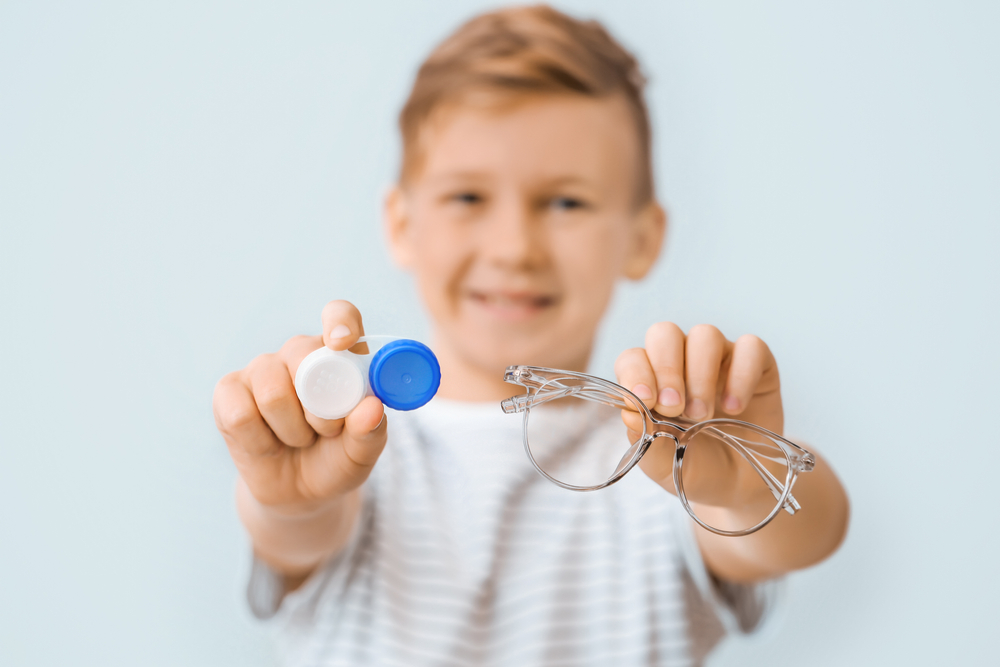
When children become nearsighted, their prescriptions may change as their eyes grow. Myopia control focuses on slowing that progression rather than simply correcting blurry distance vision. At Eye of the Tiger Vision in Hamilton, NJ, we encourage parents to ask about myopia management early, even when their child’s prescription is still mild.
There is no single best age for every child. The right time to consider treatment is generally when myopia is first diagnosed, especially if a child's prescription is increasing. Children often experience faster myopia progression between ages 7 and 12, but nearsightedness can develop earlier or later.
A child as young as six may benefit from an evaluation. However, the treatment we recommend depends on their age, prescription, eye health, and ability to follow instructions. Children with nearsighted parents may also benefit from closer monitoring before myopia develops.
Myopia often progresses throughout childhood and into the teenage years. The younger a child becomes nearsighted, the more time their prescription may have to increase. Higher levels of myopia are associated with greater lifetime risks of retinal detachment, glaucoma, and other eye conditions.
Starting myopia management early may help limit how much the prescription changes over time. While treatment cannot guarantee that myopia will stop progressing, reducing its rate of progression can support long-term eye health.
Some children do not realize their distance vision is blurry. Parents should schedule an eye exam if they notice:
· Squinting to read signs or see the classroom board
· Sitting unusually close to the television
· Complaining that distant objects look blurry
· Needing stronger glasses prescriptions at successive exams
A comprehensive children's eye exam can determine whether these changes are related to myopia. School vision screenings are useful, but they do not replace a full assessment.
At Eye of the Tiger Vision, we offer individualized myopia management options, including specialized soft contact lenses, low-dose atropine eye drops, and myopia-control glasses such as Essilor Stellest. We also offer orthokeratology, or Ortho-K, which uses specially fitted overnight lenses to temporarily reshape the cornea.
These approaches work differently, and not every option suits every child. Low-dose atropine helps slow progression but does not replace glasses or contacts for clear vision. Ortho-K requires careful lens hygiene and follow-up because overnight contact lens wear carries an infection risk.
We discuss the benefits, limitations, and daily responsibilities of each approach before recommending a plan.
Myopia management is an ongoing process. During follow-up visits, we assess vision and prescription changes, review how treatment is working, and make adjustments when needed. We may recommend more frequent visits than a standard annual exam for children receiving myopia control.
Parents can also encourage outdoor play and regular breaks from close-up work. These habits support healthy vision but do not replace prescribed treatment.
Schedule a children's myopia control consultation with Eye of the Tiger Vision in Hamilton, NJ, by calling (609) 527-9500 or East Windsor, NJ, at (609) 308-2850 today.
Flowbite is an open-source library of interactive components built on top of Tailwind CSS including buttons, dropdowns, modals, navbars, and more.
Check out this guide to learn how to get started and start developing websites even faster with components on top of Tailwind CSS.

Discover personalized eye care excellence with our comprehensive services. From eye exams to advanced diagnostics, trust us for all your vision needs.

For non-urgent questions or to learn more about our services, contact us today!
© 2026 Eye of the Tiger Vision. All rights Reserved - Accessibility Statement - Privacy Policy - Sitemap
Managed and Designed by 
